Do you need an llms.txt file?
Not to be found in Google or in AI answers. Google says no special AI files are needed, and the file mainly helps sites whose readers are coding assistants, such as developer documentation.
For most business websites, no. Google says you do not need any special AI file to appear in AI Overviews or AI Mode, and none of the AI search bots says it reads llms.txt when deciding who to recommend. It is cheap and harmless, so make one if your site is documentation that coding assistants read, and spend the time on your pages if it is not.
What is llms.txt?
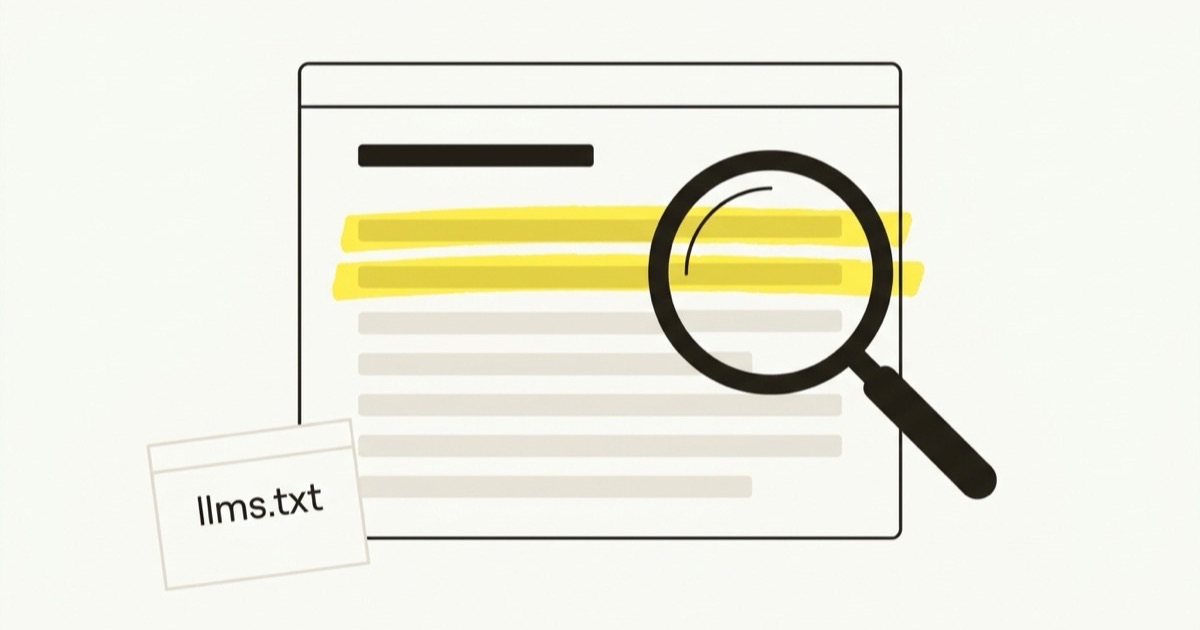
A plain Markdown file at yoursite.com/llms.txt that tells a language model what your site is and where the useful pages are. Jeremy Howard of Answer.AI proposed it in September 2024. The format is loose: a heading with the site's name, a one-line summary in a quote block, then lists of links grouped under subheadings.
# Harbour Physio

> Physiotherapy clinic in Brighton for sports injuries, back pain and post-surgery rehab.

## Services

- [Sports injury rehab](https://example.com/sports-injuries): assessment and treatment plans
- [Prices](https://example.com/prices): session prices and packages
The idea is sensible. Web pages are full of menus, cookie banners and scripts, and a short Markdown map is easier for a model to read than a homepage.
Does Google or ChatGPT read it?
Google has answered for its own products. Its guide to AI features in Search says: "You don't need to create new machine readable files, AI text files, or markup to appear in these features." AI Overviews and AI Mode pick pages from the normal Google index, using the same signals as ordinary search.
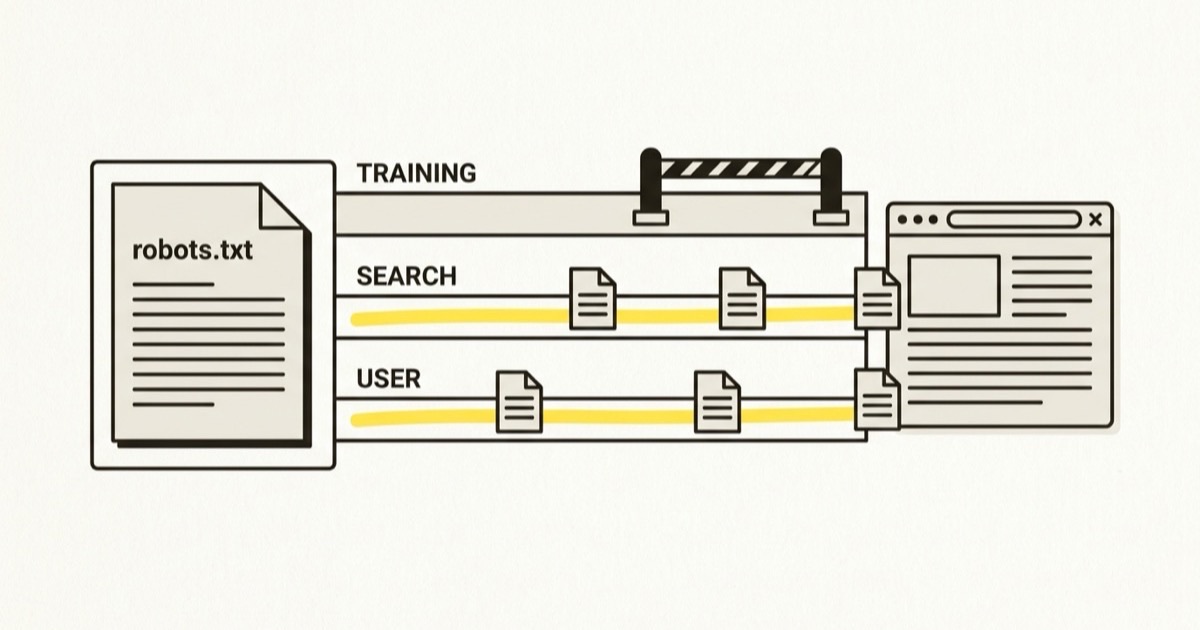
OpenAI, Anthropic and Perplexity each publish documentation for their crawlers, covering which bots exist and how robots.txt controls them. None of them says its search bot reads llms.txt or gives a site any credit for having one. When ChatGPT searches the web to answer "who is a good physio in Brighton?", it draws on search results and the pages behind them, and those are your normal HTML pages.
An llms.txt file describes your site. The engines still read the pages it points to, and those are what get quoted.
When is an llms.txt worth making?
When the people reading your site are using a coding assistant. Developer documentation is the clearest case: someone building with an API can point Claude, ChatGPT or Cursor at the docs, and a clean Markdown index helps the assistant find the right page. Stripe's documentation publishes one, with links to a Markdown copy of each page.
It is also harmless everywhere else. Making one takes a few minutes, it costs nothing to host, and no search engine has said it counts against you. Be suspicious of anyone who offers to sell you one as an AI visibility service, because the companies that run the engines have not said it does anything for visibility.
What should you work on instead?
The pages the file would point to. Every AI answer that recommends a business is built from text the engine could fetch and understand, so the work that pays is on the page itself.
Start with the opening of your most important service page. Engines lift passages that answer a question directly, so the first two sentences should say what you do, who for, where, and roughly what it costs. Then check that everything you are proud of exists as plain text: a portfolio, a video or a gallery tells an engine nothing unless a paragraph describes it. Then check that each important question a buyer asks has its own page that answers it head on.
None of that needs a new file format, and all of it helps in Google as well.
Do this today
- Check whether you already have one. Open
yoursite.com/llms.txt. If your website builder made one, leave it. - Skip it if you are a local or service business. The engines have not said they read it, and the time is better spent on your pages.
- Make one if you publish docs. If developers use your documentation, add an llms.txt that links to your key pages, ideally in Markdown.
- Rewrite the first two sentences of your main page instead. Say what you do, who for, where, and roughly what it costs, in words a buyer would use.
Whatever files you publish, check whether AI engines name your business.
More articles
All articles