How do you write a title tag and H1 that get found?
Put what the page offers first, then who or where it is for, then your brand. Give each page one H1 that says what the page does in the words a buyer would type.
Say what the page offers, in the words a buyer would use, before anything else. A good title tag reads service, then audience or place, then one qualifier, with your brand name last; a good H1 states what the page does in plain words. Both are among the first things Google and AI engines read when they decide what a page is about, and many sites waste them on a brand name or a slogan.
What is the difference between a title tag and an H1?
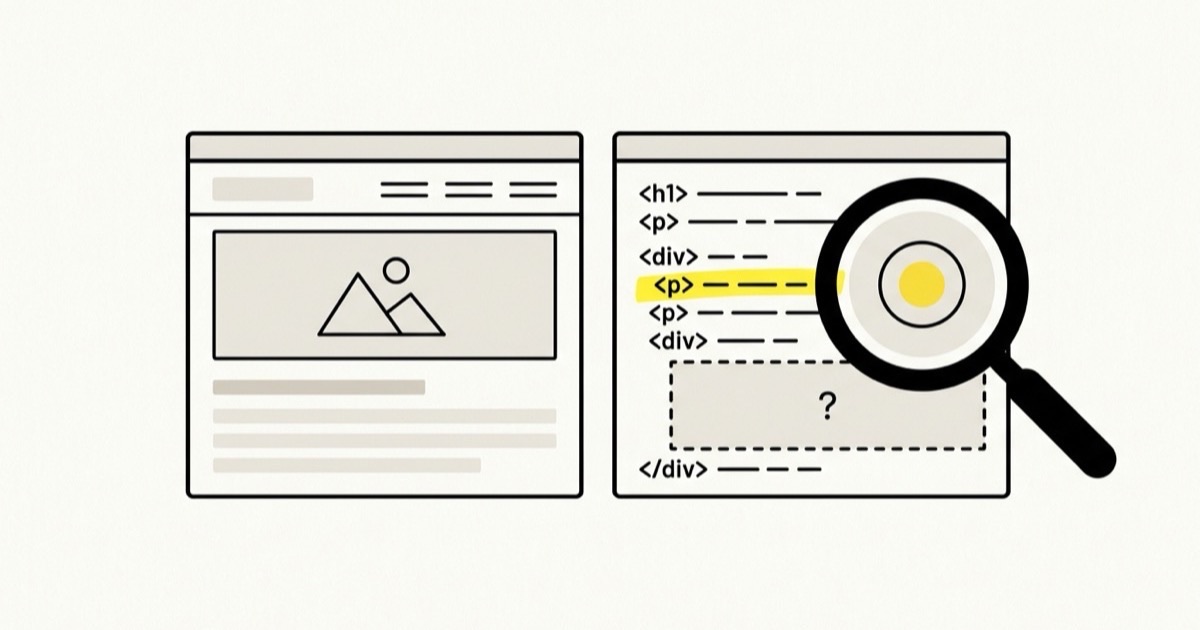
The title tag lives in the page's code, inside <title>. Visitors see it in the browser tab and, usually, as the blue link in Google's results. The H1 is the main heading printed on the page itself, normally the biggest text near the top.
They do related jobs. The title has to win the click from a list of results, and the H1 has to confirm, once someone lands, that they are in the right place. Google's own documentation lists both as sources it uses when it writes the link text in results, along with other headings and the page's social sharing title. If your title tag is vague, Google may swap in your H1 instead, so both need to say the thing.
How should you write the title tag?
Use a simple pattern: what the page offers, who or where it is for, one qualifier if there is room, and your brand name last.
| Weak title | Stronger title |
|---|---|
| Home | Your Brand | Bookkeeping for small businesses in Bristol | Your Brand |
| Services | Emergency dental appointments in Leeds, same day | Your Brand |
| Your Brand: Welcome | Rota and payroll software for restaurants | Your Brand |
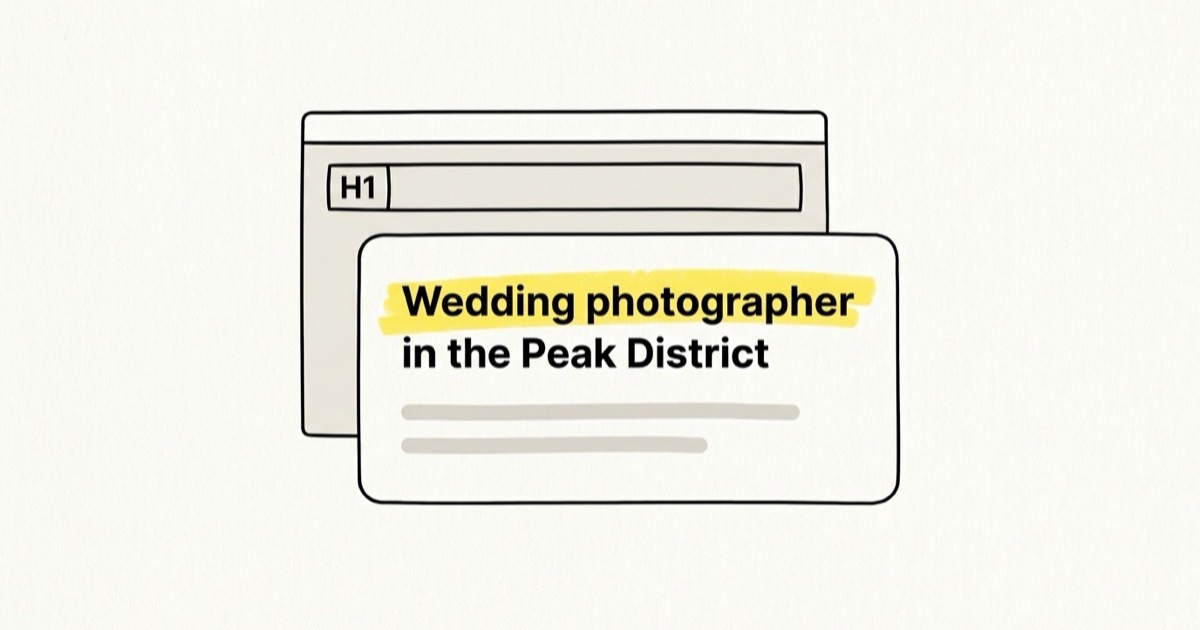
| Portfolio | Wedding photographer in the Peak District | Your Brand |
The brand-only title matches nobody's search. People who already know your name will find you anyway. The title's job is to match the people who do not, and they type the service and the place or the problem, not your name.
Put the important words first. Google cuts long titles to fit the screen, so a title that opens with your company name and a tagline may lose the service words off the end on a phone. Say each thing once, too. Google's guidance singles out titles that repeat the same phrase in several forms, and a title like "Plumber Leeds, Plumbers in Leeds, Leeds Plumbing" reads as spam to a person before any algorithm gets involved.
Every page needs its own title. If your service pages all share "Our Services | Your Brand", none of them can win a specific search.
How should you write the H1?
State what the page does. "Where ideas take flight" is a slogan, and a machine reading it learns nothing about what you sell. "Wedding photography in the Peak District" tells a visitor and an engine the same thing at once.
Use one H1 per page. Some website themes make the logo an H1, or style every section heading as one, which leaves a page with several competing claims about what it is for. Open your page, right-click the main heading, choose Inspect, and check the tag says h1. Then check nothing else on the page does.
Write it in the buyer's words. Your industry may call it "facilities management solutions", but a buyer types "office cleaning". Engines match the meaning of a question against the meaning of your page, and a heading in trade vocabulary matches a buyer's question less well than the buyer's own words do.
Your brand name wins searches from people who already know you. Everyone else types the service and the place.
Does this help in AI answers as well?
Yes, for the same reason it helps in Google. AI engines that search the web read the same pages, and the title and main heading are the plainest statement of what a page is about. A page titled "Home" gives an engine nothing to match against "who does bookkeeping for small businesses in Bristol?", while a page with that phrase in its title and H1, and an opening paragraph that answers it, is easy to match and easy to quote.
Do this today
- List your five most visited pages. Your analytics or Search Console will show which they are.
- Rewrite each title as service, audience or place, qualifier, brand. Keep the service words at the front and use each phrase once.
- Check each page has exactly one H1. It should say what the page does in plain words, with no slogan.
- Swap trade jargon for the buyer's phrasing. Read the title and H1 aloud and replace any word a customer would never type.
Once your pages say what they are, see whether AI engines recommend you for it.
More articles
All articles