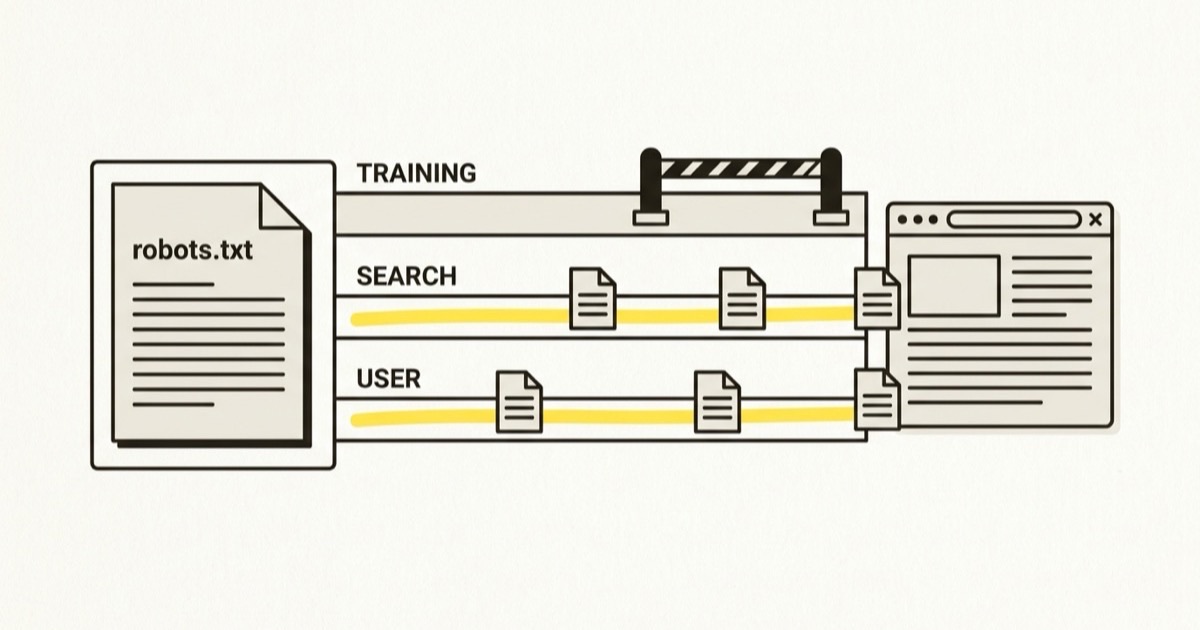
How do you write an FAQ page that AI answers will quote?
Use the questions customers actually ask you, in their words, and answer each one in two or three plain sentences that make sense on their own. Markup is optional; the answers are what get quoted.
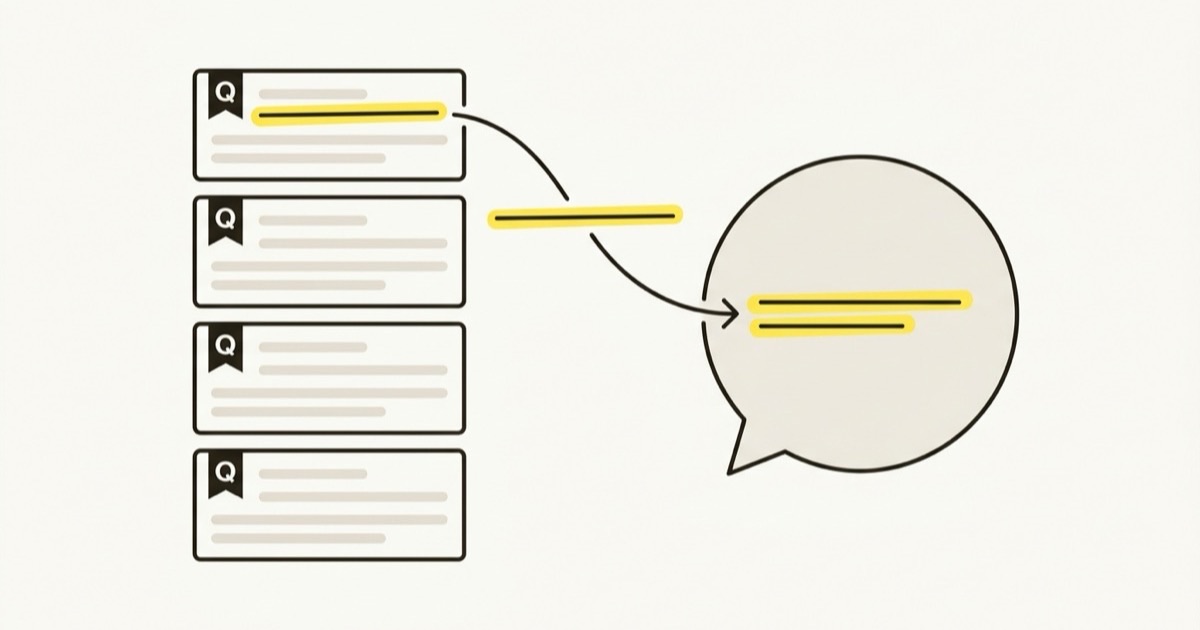
Start from the questions customers really ask, not the ones you wish they asked. Write each question in the customer's words and answer it in the first sentence, in two or three sentences that still make sense when lifted off the page. That is the shape AI engines quote, and a buyer's question to ChatGPT can match one of yours almost word for word.
Why do FAQ pages work for AI answers?
Because the format matches the job. Someone asks an assistant "do physiotherapists need a GP referral?" or "how long does a website redesign take?", and the engine looks for a passage that answers that exact question directly. A good FAQ is a stack of those passages, each one labelled with the question it answers.
Many business sites bury their answers. The price sits in paragraph four of the services page, the service area is only on a map, and the turnaround time is in a PDF. An engine can only quote what it can find and understand as text, so an FAQ that answers the common questions in plain sentences puts those answers where they can be read.
Where do you find the real questions?
In the places where customers have already asked them. Questions invented in a meeting sound like marketing ("Why choose us?") and match nothing a buyer types. Look here instead:
- Your inbox and enquiry forms. Search your sent mail for the explanations you type out again and again.
- Whoever answers the phone. Ask them for the five questions they hear every week.
- Search Console. The Performance report lists searches that brought people to your site, and the ones phrased as questions are ready-made FAQ entries.
- Reviews, yours and competitors'. Complaints and praise both point at what people worry about before they buy.
- Sales calls. The objections that come up before someone signs are the questions they were too polite to email.
Keep the customer's phrasing. If people ask "can you come out on a Sunday?", use that, not "What are your service hours?".
How should each answer be written?
Answer in the first sentence. "Yes, we take self-referrals, so you do not need to see your GP first" can be quoted on its own. "Great question! Many of our patients wonder about this" cannot.
Keep each answer to two or three sentences. Add the one detail that makes the answer useful, such as a price range, a timescale or a condition, and stop. If an answer needs five paragraphs, it deserves its own page, with the FAQ linking to it.
Make every answer stand alone. An engine may quote one answer without the rest of the page, so "as mentioned above" and "see our other plans" leave a quoted answer meaning nothing. Name the service and, where it matters, the place.
Be straight about the awkward questions. "How much does it cost?" answered with "every project is different, get in touch" gives an engine nothing to quote, and it can quote a competitor who gave a range instead.
Engines quote the answer. Write the first sentence so it works alone.
Does FAQ schema markup help?
Not for appearing in Google's AI features, and it is optional everywhere else. FAQPage markup labels your questions and answers in a format machines can parse, and it does no harm if the content is real. It cannot make a vague answer worth quoting. Google's guide to AI features in Search says plainly that there is "no special schema.org structured data that you need to add" to appear in AI Overviews or AI Mode.
Spend your hour on the answers first. If you have time left, add the markup, and make sure it matches the visible text word for word.
Where should the FAQ live?
Put questions next to the thing they are about. Questions about one service belong at the bottom of that service's page, where they add detail to a page an engine already reads as the answer about that service. A single general FAQ page works for questions about the business as a whole: booking, payment, areas you cover, how to cancel.
Avoid hiding answers in accordions that only load when clicked. Collapsed text is fine if it is in the page's HTML from the start. It is a problem when a script fetches it after the click, because a crawler that does not click never sees it.
Do this today
- Collect ten real questions. Pull them from your inbox, your phone calls and your Search Console queries, in the customer's own words.
- Answer each one in the first sentence. Two or three sentences in all, with one useful specific such as a price range or a timescale.
- Put each answer where it belongs. Service questions on the service page, business questions on one FAQ page.
- Check the answers are in the page source. Right-click, View page source, and search for one answer's first sentence.
When your answers are written, see whether AI engines already quote you or a competitor.
More articles
All articles